

Lesson 6) (The Bells of) The Hunchback of Notre Dame
Thank you everyone for your patience! We're approaching the end of Disney Lit Weeks and I can't thank you all enough for being part of the magic. Today's lesson will be taught by Professor Hackett, your Muggle Studies professor (https://www.facebook.com/hihmugglestudy). You will also hear from your Co-Professors of History of Magic: Dowler and Maddox (https://www.facebook.com/HiHHistoryOfMagic).
The final lessons will be posted before Creature Feature begins, so please bear with us until then!
The Hunchback of Notre Dame is my favourite Disney film, so this lesson was particularly special to me and I am very grateful to Professor Hackett for doing such a wonderful job.
For those interested in hearing what Tony Jay (the voice actor of Frollo) had to say about his character, listen to this.
Enjoy!
EH
http://www.hogwartsishere.com/emmahart/https://www.facebook.com/emmaharthih
Greetings, students!
I’m Professor Hackett, and today we’ll be going over my (and Professor Hart's) absolute favorite Disney film - and one of my favorite pieces of classical literature, The Hunchback of Notre-Dame (or Notre-Dame de Paris, by its original title). This is, sadly, easily one of Disney’s most overlooked titles, and a large part of that is because of its darkness in comparison to Disney’s more light-hearted films. The Hunchback of Notre-Dame hosts themes that are not only dark for the Disney universe, but dark as deemed by the general populace. Yet, the film's darkness is part of its beautiful charm and we'll explore such "taboo" themes including religious questioning and racism, as these are likely the reason the film often goes overlooked.
Without further ado, let’s begin!
The Novel and Its Author
The original novel (Notre-Dame de Paris) was written by Victor Marie Hugo and published in 1831. This novel, believe it or not, was actually written with a purpose beyond entertainment. Hugo had a hidden agenda to see to it that the popularity of his book brought tourism to Paris, shaming the not-so-beautiful ‘City of Love’ to better cater to its historical buildings. You see, Hugo had a passion not only for writing, but also for Gothic architecture, and as the lovely Cathedral of Notre-Dame was falling into a severe state of disrepair at the time, it became the center of his masterpiece.
For those that have read the book before, you’ll have noticed an excruciating take on detail when it comes to how Hugo describes the buildings, inside and out. This was part of the plan, letting readers know how it was supposed to look. This was further backed by Hugo’s publishing of a paper that he called "Guerre aux Démolisseurs" (War of the Demolishers) a few years prior to the release of the book. This paper’s purpose was to attempt to preserve Paris’ old architecture.
The “True Artistry” (Architecture, the Novel's Main Theme)
“This will kill that.” - Claude Frollo, speaking as he looks from a printed book to the cathedral.
Hugo was a huge advocate of the artistry in architecture - particularly grand, old buildings. He made this a solid, obvious matter in Notre-Dame de Paris when he used Claude Frollo to voice his own views on printed books versus the Church. Hugo went so far as to state, blatantly, that while the written word was limited in production and censored for the most part, architecture was limitless, prominent, and liberating:
There exists in this era, for thoughts written in stone, a privilege absolutely comparable to our current freedom of the press. It is the freedom of architecture.
With the rise of the printing press, and books becoming quickly and readily available in mass, Hugo saw this as the last days of the great beauty of architecture in its artistic form. He also made it a point to bash the poor repair job done to the cathedral post-French Revolution, saying that there was no longer a particular style that they stuck to - the artistry was completely lost for the sake of quick and easy practicality, and it was uglier than it was during the state of disrepair. Because of Hugo’s love for this particular subject, which is recurring in many of his literary works, each nook and cranny finds itself with a form of life within his pages.For those that don't know, Hugo is also responsible for another famous French novel: Les Misérables. If you're interested in this novel, you should potentially watch its musical adaptation, as it possesses one of the most evocative and striking soundtracks of all time. If you should be particularly fond of musicals, I highly recommend enrolling in Professor Honeysett's Magical Art class. And who knows, perhaps we may have a Special Week on musicals one day in the future!


When Hugo died, all of France mourned. More than 2 million people followed the procession of Hugo's casket--the largest mass mobilization ever seen in Paris (and more than the city's total population at the time). The French government, fearing an uprising, decided to capitalize on the event by co-opting and turning it into the theatrical event you can see above. However, despite the highly ritualized ceremony (Hugo, in his will, requested a pauper's funeral), the funeral procession drew out the poorest citizens of Paris. Hugo's death was a great loss for France as he, through his powerful works, gave a voice to the voiceless.
The Characters
Now that you’ve got a little bit of story's context, let’s hop right into the film, shall we?
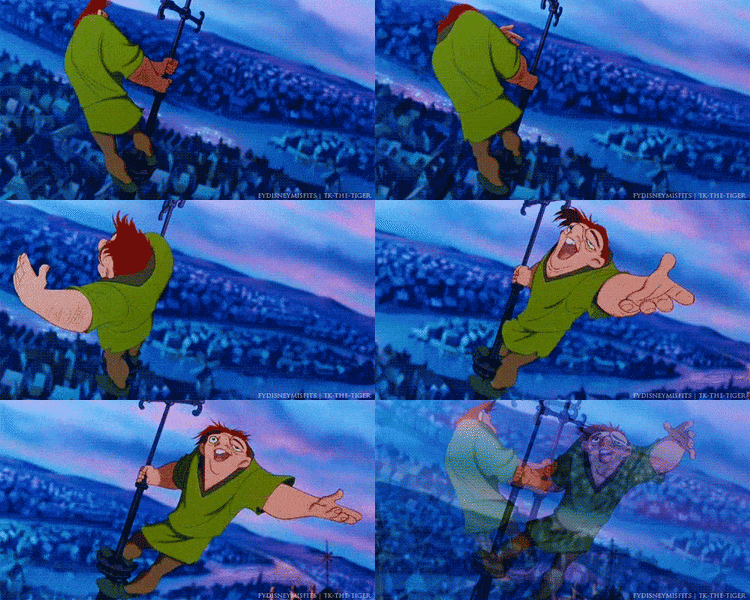
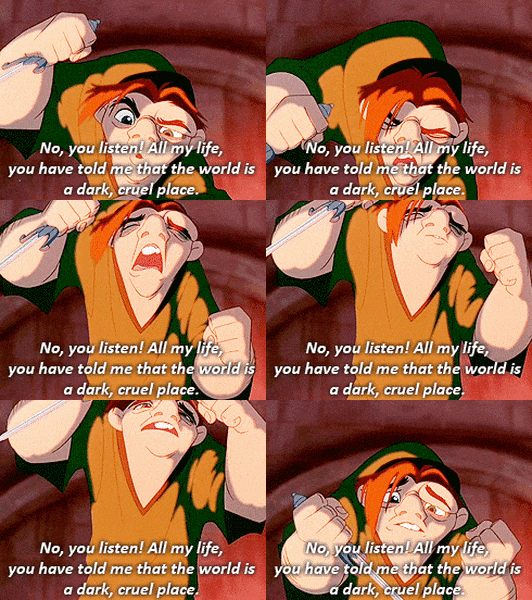
This story centers itself around Quasimodo, a deformed man that rings the bells of Notre-Dame throughout the day. In the novel, he is deaf and half-blind, and called despicable things such as “a creation of the Devil”. He walks with a crouch, the hump on his back forbidding him from standing upright, and the wart that is engorged over his eye impairs his vision greatly.
As a babe, he had been born to Gypsies, and this is something that Disney has depicted that neither of the other movies had dared to touch, but what Disney failed to show was that Quasimodo was not forcibly taken from his family -- his family utterly abandoned him because even they thought he was a monster, and they replaced him with another child. In Disney's film, the film's narrator, Clopin, asserts that Frollo gave the child "a cruel name; a name that means 'half form'). However, in Hugo's novel, the origin of his name comes from the day he was found on: Quasimodo Sunday (the Sunday after Easter). Like his Disney counterpart, Quasimodo is a very kind-hearted soul.
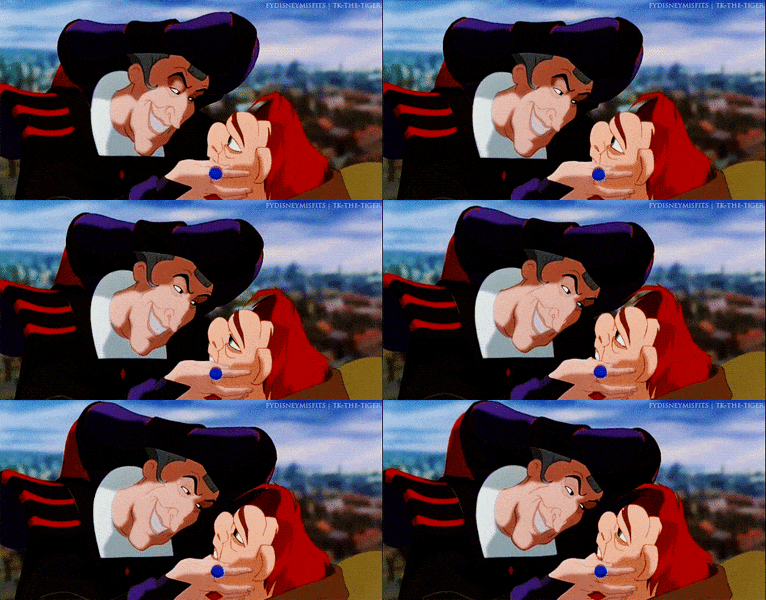
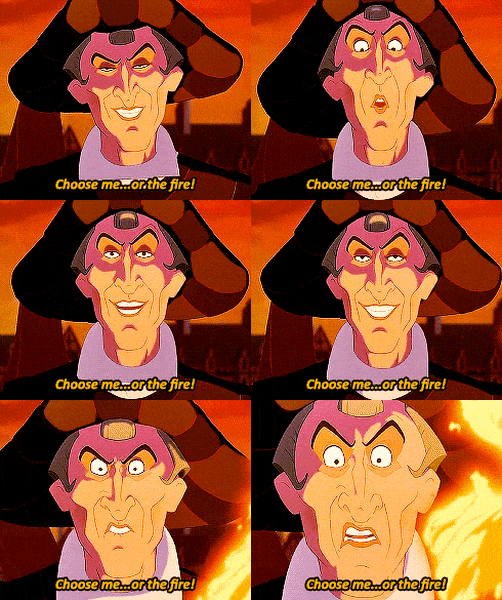
My favorite character from any perspective has always been Archdeacon Claude Frollo. In the novel, Frollo is a passionate, kind man and not the creature of hate and destruction that Disney depicts him as, though admittedly I even found Disney's take on the character to be quite charming and deep. In the novel, Frollo takes Quasimodo in, teaches him, helps him, guides him, and devotes himself, heart and soul, to raising the boy as if he were his own. We get the sense that Frollo is a good man at heart, and he is extremely devout in his beliefs of the Church and fate. He is described as being around thirty-six years of age, austere, aged beyond years in the face, and balding, and has an irrational fear of the fairer sex. He often holds himself up in the church to isolate himself from the outside world. In fact, he does a very nice job at doing just that until he lays eyes on Esméralda.
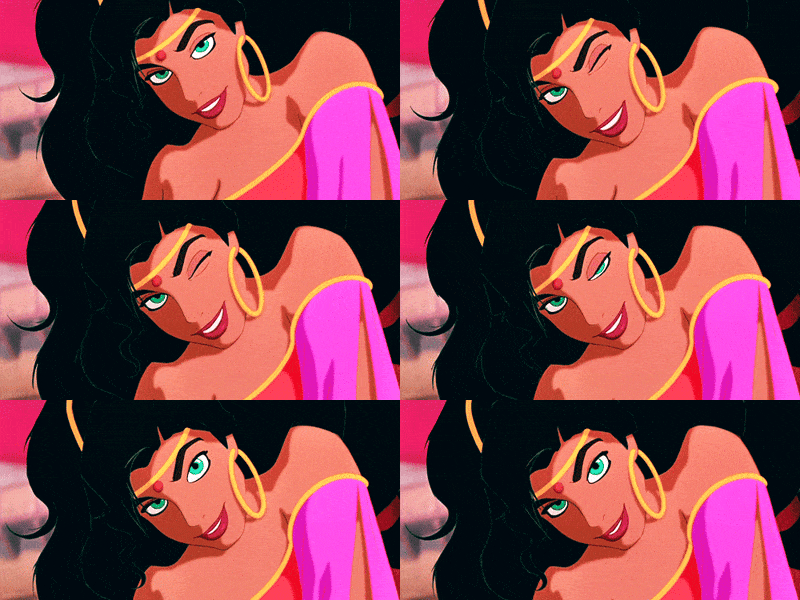
Esméralda, or La Esméralda (born Agnes) is the girl in the middle of all the conflict. She was born the daughter of a French coquette, but was kidnapped and raised by Gypsies. In fact, Esméralda's adoptive parents are none other than the same parents who abandoned Quasimodo, a plot point entirely re-written in Disney's film.
Esméralda grows up to be exceptionally beautiful, catching the fancy of all who lay eye on her as she entices them with dancing in the streets for coin. Her main companion is a goat named Djali, whom performs tricks for the audiences that the Gypsy girl pulls in. She is meant to be an angelic sort of figure amongst the deformity, hate, and betrayal symbolized by the other main characters. Later in the story, she is rescued by Captain of the Guard, Phoebus de Châteaupers.
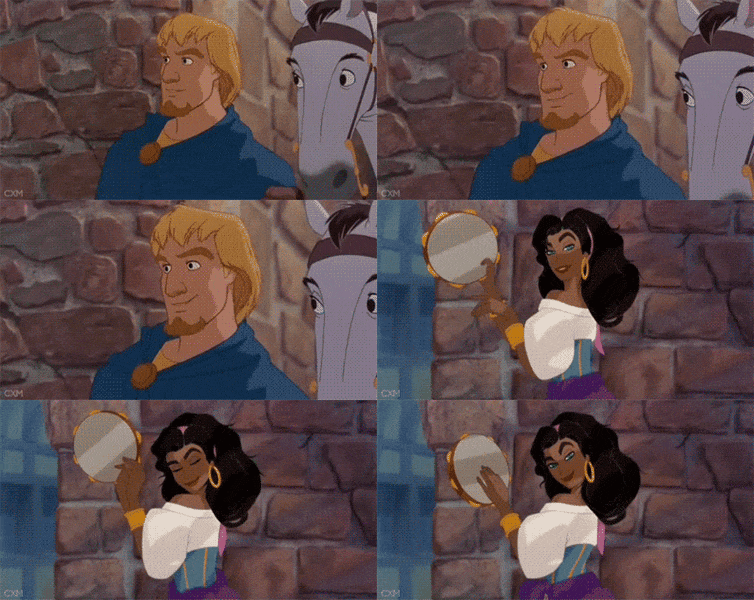
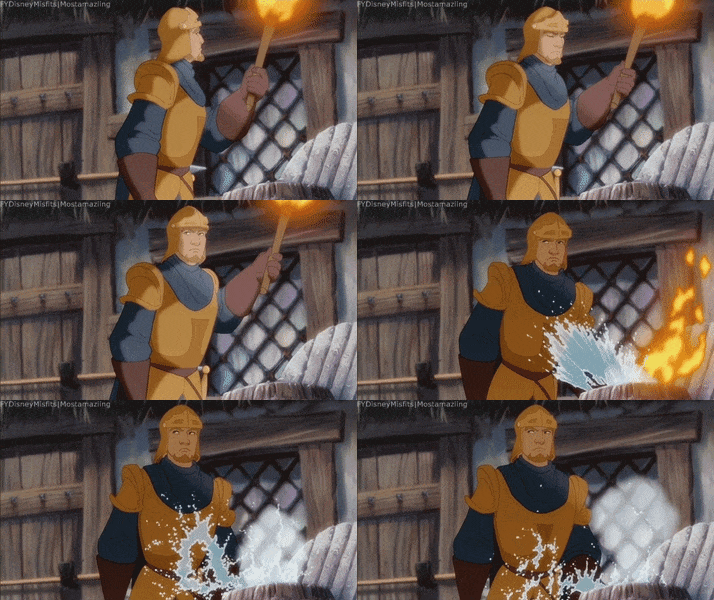
Captain Phoebus is portrayed in the Disney version as a kind, loving, noble man that is out to right wrongs and protect the innocent - to be fair, true, and fully devoted to great cause. This could not be further from the truth, according to the novel. Phoebus may have saved Esméralda, but his intentions were far from that of a fool in love - it’s quite the opposite. Phoebus is a vain, untrustworthy man with an insatiable appetite for women.
The Musical Mastery of Disney (Story and Symbolism)
If there is one thing that Disney has proven over the years, it’s that they know how to perfectly set a mood and tell a story through the art of music. Disney's soundtracks brought us a mixture of history and folklore to life through the re-framing of the story of a legendary "outlaw" and his quest to steal back a kingdom's riches from "the phony King of England" (Robin Hood); they entertainingly modernized a mythological hero's tale of his efforts to rejoin the Gods (Hercules); they also (somewhat) educated us about Native American culture and the importance of taking care of our planet (Pocahontas).
No matter the situation for which the songs are written and composed, Disney has always done an astounding job of pulling us in to the stories through the power of song. The Hunchback of Notre-Dame (perhaps even to a much richer degree) is no exception.
Produced by the masterminds of Stephen Schwartz (lyricist of Broadway hits such as Wicked and Disney’s Pocahontas) as well as Alan Menken (composer of scores for The Little Mermaid, Beauty and the Beast, Aladdin, and Pocahontas), the soundtrack of this film is, by far, one of the most heart-stoppingly beautiful things I’ve ever had the pleasure of hearing (and Professor Hart tells me she agrees!).
The vocals of Tom Hulce (Quasimodo) and Tony Jay (Claude Frollo) are the most powerful throughout the film, with Heidi Mollenhauer (Esmeralda) and Paul Kandel (Clopin) coming in at a close second. The very first song of the film is opened by Paul Kandel, beginning the story of how Quasimodo came to be at Notre-Dame (which, as you now know, is false). In “The Bells of Notre-Dame”, Clopin tells the tale of four Gypsies that are sneaking into Paris, but a trap had been set for them in which Judge Claude Frollo appears on a black horse. This horse is thought to symbolize a ‘Law-Giver’, as this is an old biblical symbolization of the Horseman of Famine, whom rides a black horse and carries a set of scales--seen as the Scales of Justice.
Quasimodo’s mother gives chase to the steps of Notre-Dame as the tempo picks up and the Gregorian chants begin. The chants finish upon the mother's death. A portion of this score is from Dies Irae (pronounced dee-es ee-ray, literally translating into ‘Day of Wrath’), a Latin hymn sung at Mass for the dead.
After causing her to fall and hit her head, and ultimately committing murder on the steps of the cathedral, Frollo attempts to throw the babe into a nearby well but is stopped by the Archdeacon. Frollo defends his stance by saying that the baby is “an unholy demon” and he’s “sending it back to Hell, where it belongs”. The Archdeacon reminds Frollo that he has spilled innocent front of the “Eyes of Notre Dame”, referring to the statues that stare down, almost accusingly, at Frollo. In this moment, and this moment alone, Frollo experience a "twinge of fear for his immortal soul".
Although the Archdeacon suggests he care for the child and raise it as his own, Frollo finds the idea repulsive and decides to keep the child locked away in the Bell Tower, surmising that "even this foul creature may yet prove one day to be of use" to him.
Tony Jay (voice of Monsieur D'Arque in Beauty and the Beast as well as Shere Khan in Jungle Book), without a doubt, has the most powerful songs in the film, and his vocals are second to none in tone. He has a very menacing, deep, dark vocal range, and venom and spite drip from every word like it’s coming off of a snake’s fangs. In the precursor to “Out There” (unofficially called “In Here”), he tries to convince Quasimodo that the world would see him as a monster and that he was safest within the bell towers of the cathedral.
Tom Hulce’s voice is gentle, boyish, and warm; the perfect contrast to Tony Jay. This is showcased particularly in “Out There”, where Quasimodo expresses his desire to walk among the folk of Paris as an equal - if only to say that he’d spent one day ‘out there’. Professor Hart tells me this is her favourite Disney song since it embodies the culmination of every Disney hero/heroine's desire for liberation (in whatever form it takes) and adventure (which is ultimately a thinly veiled motif for self-discovery). It is a soulful and powerful song, and is almost matched (through its theme of 'outcast' and almost painful longing) by "Go the Distance" in Hercules (and perhaps Aladdin's unfortunately brief yet lovely "Street Rat/So Much More to Me").
What sets this song apart from the others, however, is that Quasimodo's desire for "more" stems from the fact that he has (virtually) nothing. Alone, and kept apart from the rest of the world (and raised to believe that the world would not want him), Quasimodo sings about how everyone else is "heedless of the gift it is to be them" and that, if he were "in their skin", he'd "treasure every instant 'out there'". Whereas Ariel sings of being "Part of [Our] World" and Belle sings of her longing "for adventure in the great wild", Quasimodo does not have an "all or nothing" mentality. He merely asks for "one day" and asserts that he will cherish that one day for the rest of his life.
Up until Quasimodo, there had been very little attempt to delve into constructing more three-dimensional male protagonists. The Beast, Aladdin, and Simba were certainly excellent attempts. However, much of the growth that occurred for these males depended, in some respects, on the interference of "magic". The Beast with his curse that could only broken with Belle's love; Aladdin with his use of (and subsequent friendship with) the Genie; and Simba with his decision to return home (after being visited by the spirit of his father, Mufasa). Unlike other Disney male characters, Quasimodo is at the moral center of the entire film.
Quasimodo is continuously assessing and reassessing the people he encounters. Although initially told by Frollo that all gypsies are cruel, Quasimodo soon learns, and continues to learn as the film progresses, that this worldview is not correct, especially after meeting Esméralda. Even after meeting Phoebus, who Quasimodo assumes is trying to hurt Esméralda, he realizes that appearances can be deceiving. Esméralda may be a gypsy and Captain Phoebus may be the Captain of the Guard, but they are both people who possess a heart of gold.
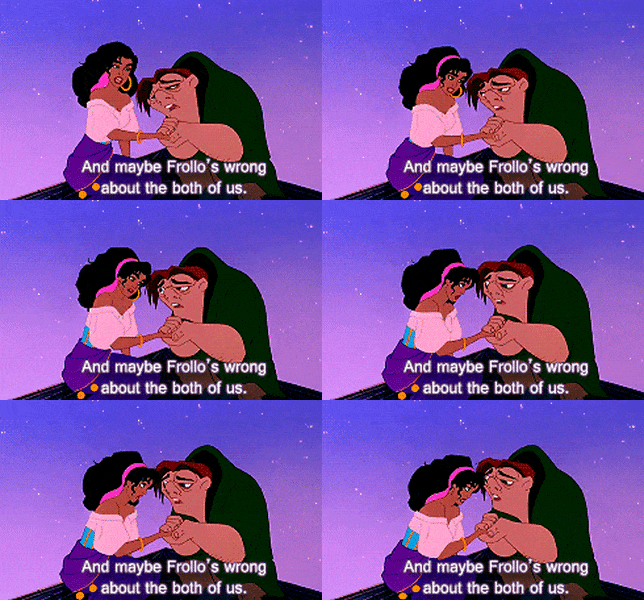
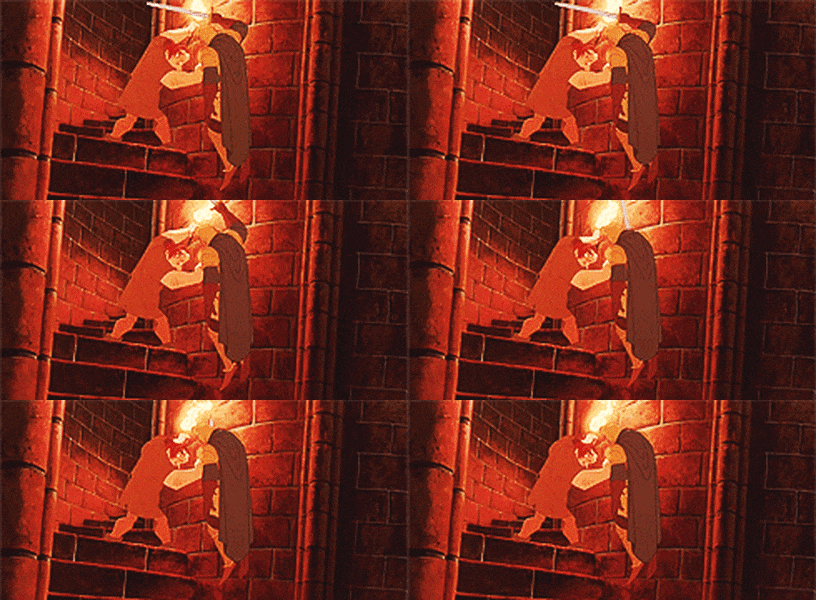
Despite being raised by a cruel man, Quasimodo is soft spoken, kind-hearted, and passionate about the world. His emotional range is wide: calm and respectful, infinitely cheerful, modestly wise, earnestly hopeful, painfully vulnerable, violently loyal, and aggressively protective--Quasimodo certainly represents one of the most genuine, three-dimensional masculine heroes that Disney has ever created. His only "fault" is, quite literally, 'skin deep', providing yet further commentary on our past and present society's problematic emphasis on aestheticism--the acceptance of artistic beauty and taste as a fundamental standard--as well as the perpetuation of unrealistic ideals of beauty. The expression "Don't judge a book by it's cover" certainly fits in this situation; Quasimodo may appear different than other people, but he is more "human" than most people you'll ever meet.
It takes another outcast, the beautiful and merciful Esméralda, to recognize that Quasimodo's plight is no different than her own.
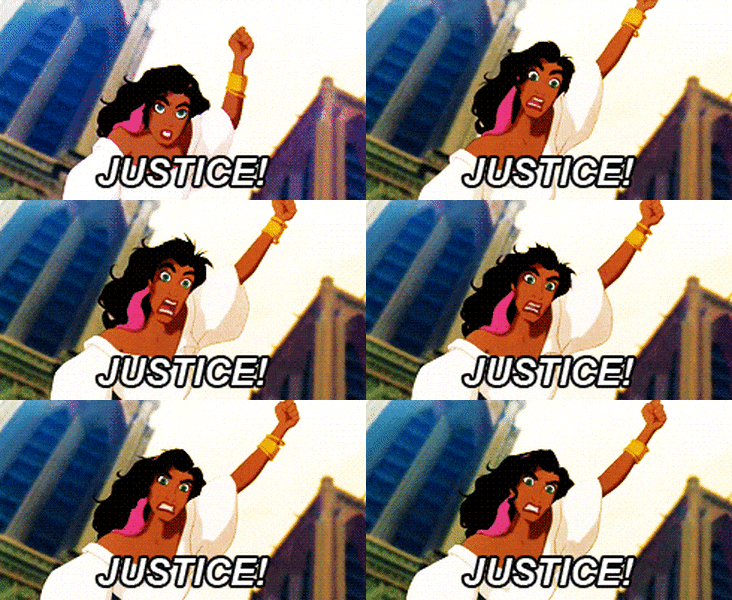
The above video conveys many of the film's secondary themes: human objectification, bigotry, racism, religious and political corruption, and the power of a simple act of kindness. Esméralda's passionate declaration of "Justice!" encompasses all of the wrongdoings of nineteenth century French society stemming as far back as the French Revolution (1789) and perhaps even picking up on Hugo's much later (1851) criticism of Napoleon III (a man who abolished the French constitution and declared himself Emperor). Although her literary counterpart does not echo such strong political ideologies, Disney's Esméralda functions as the voice of the oppressed, which we will discuss further in a few minutes.
Hiding in Notre-Dame from Frollo's men, Esméralda has a rather flirtatious encounter with Captain Phoebus who saves Esméralda by informing Frollo that she has declared "Sanctuary". Towards the end of this scene, we learn of Frollo's real motives:
Frollo may pretend like he only wants her arrested for publicly defying him, but his declaration of "you're mine" if she steps outside speaks to much darker implications. After Frollo leaves, Esméralda converses briefly with the Archdeacon regarding Frollo's atrocious abuse of his power. Esméralda passionately believes that someone should stand up to Frollo, though the Archdeacon cautions her: "You can't right all the wrongs of this world" and suggests that someone "in here" (Notre-Dame) potentially can.
"God Help The Outcasts” is somewhat of a religious hymn, sung by Esméralda as she walks through the cathedral after ducking out of trouble with the city guard. This is described as one of the most moving scenes throughout the movie, mostly due to the fact that she “asks for nothing” and only looks to pray for those that are less fortunate than she is - people like Quasimodo (since this scene takes place directly after he is bound and publicly ridiculed) and the other Gypsies who are hunted down and arrested for killed simply for being alive.
This song is characterized by its solemn, soulful, and striking melody, as well as Heidi Mollenhauer's (who once stated in an interview that every time she thought of her experience singing the song, she would get 'choked up') gorgeous vocals. The song contrasts the privileged church-attenders praying to God for material things, such as wealth and glory, whereas Esméralda prays for salvation for her people, innocently reasoning that we are all "children of God".
Listening to Esméralda's captivating message, Quasimodo breaks out into a song of his own. He speaks of lovers walking the streets of Paris, and how they seem to glow because of their love for one another, calling it ‘Heaven’s light’ (because love is sacred and viewed as a blessing). The song emphasizes how Quasimodo believed that he was never meant for that kind of happiness due to his deformity. He speaks of Esméralda, who has touched his heart in ways that no other ever has, stating that she showed no fear of his exterior - because of this, she is viewed as an angelic figure in his eyes. He has thoughts that she may care for him, and that the very thought of her makes the darkness of his world seem to vanish into the world of Heaven’s light.
The song sets a sharp contrast to the one that follows, sung by Frollo, "Hellfire" which is my favourite song off the soundtrack, and all-time favourite Disney song (and Professor Hart's favourite 'villain' song). This is, without a doubt, the darkest song that Disney has ever put into a film; so much so that they almost took it out of the final product because of the language and mature context of the song, not to mention the imagery that goes along with it. This sequence alone nearly caused the entire film to go from a G rating to PG. Sung by Frollo in a moment of desperation, “Hellfire” is a beastly and forceful number in which he refers to Esméralda as the fire itself, declaring that Esméralda is responsible for the lust that he feels. Although at first imploring Saint Maria for protection, Frollo then changes tactics and bargains with the "Hell Fire": unless Esméralda agrees to become his, she will "burn" (at the stake).
Upon learning that Esméralda has escaped from Notre-Dame, Frollo sets all of Paris on fire. Refusing to obey Frollo's orders to burn a family alive, Captain Phoebus is almost killed (via arrows and near-drowning) but survives on account of Esméralda's interference. Esméralda then takes Phoebus to the only place where she knows he'll be safe: Notre-Dame.
Before she arrives, Quasimodo's hilarious stone sidekicks, Victor and Hugo (named after the author) and Laverne (named after the director's wife) sing "A Guy Like You" as a kind of "pep talk" regarding Esméralda. The three stone gargoyles are certainly some of the more unique Disney sidekicks up until this point, as they are neither human nor animal (Frozen's Olaf, of course, is a magically-infused snowman). While the Beast's sidekicks are sentient household objects, they are, as you may recall, human beings placed under an enchantment.
The "magic" behind the gargoyles is never fully explained, however. Some people suggest the gargoyles are merely a figment of Quasimodo's imagination, but this doesn't explain why Djali (Esméralda's goat whom Hugo appears to be attracted to) is also able to see Hugo come to life. While certainly unique in their "being" status, the gargoyles also seem to provide a better balance of humour and wisdom (with the exception, perhaps, of Pinocchio's Jiminy Cricket) than other Disney sidekicks (such as Scuttle, Abu, Mushu, and Timon and Pumbaa).
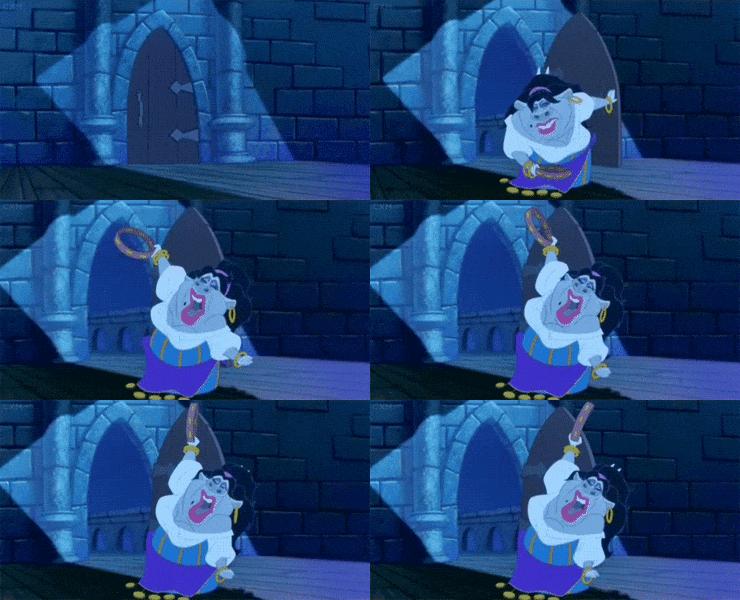

Hugo is the "comedic relief" in an otherwise extremely dark film. Victor perhaps anticipates Warner Bros' Quest for Camelot's Devon, the "intellectual" dragon head on the body of the film's two-headed dragon (the other head being Cornwall, who is quite similar to Hugo in many respects). Laverne is the maternal figure of the three and often the voice of reason and wisdom (the video would not play on this site, so you'll need to watch it on YouTube. Important for the quiz!).
While their words of encouragement regarding Esméralda are sweet and well-intentioned, they are wrong about her true feelings. When Quasimoda witnesses Esméralda and Phoebus kiss, we see his heart shatter, his face crumpling in pain. In fact, in the novel, when Quasimodo watches Esméralda ride off with her love interest, he utters: "Why was I not made of stone like thee?" (his face pressed against the stone gargoyle atop Notre-Dame).
In Disney's film, Quasimodo internally sings "Heaven’s Light (Reprise)”, but this time, in heart-wrenching sadness:
By this point, Frollo has cooked up a plan. Realizing that Quasimodo helped Esméralda escape, he visits him at Notre-Dame and tricks Quasi by telling him that he has discovered the gypsies hideout and intends to attack at dawn with one hundred men. When Frollo leaves, Phoebus, still wounded, is adamant that they find a way to the Court of Miracles in order to warn the gypsies. Again showing himself to be a better human being than most, Quasimodo swallows his pride and does his best to work with Phoebus in order to locate the secret hideaway using the "woven band" map that Esméralda gave him.
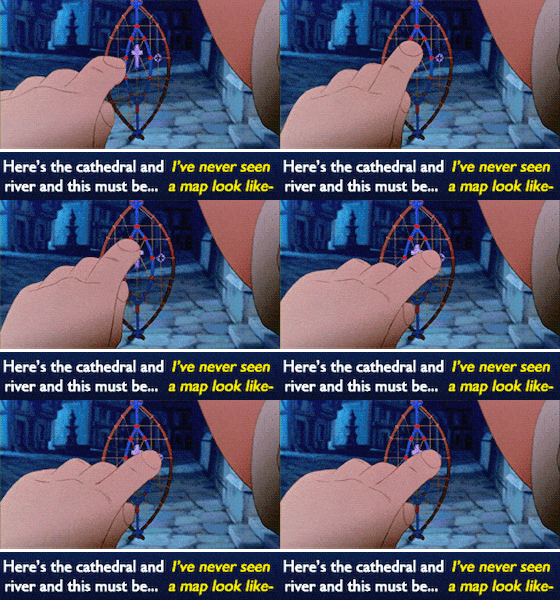
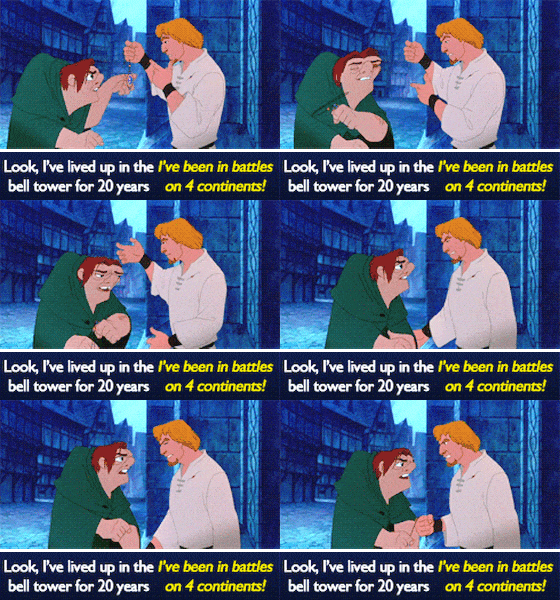
However, their plan goes slightly awry when they arrive as Clopin and the other gypsies assume that they're there as spies and intend to hang them on the gallows. Thankfully, yet again, Esméralda shows up in order to explain that Quasimodo and Phoebus are their friends. Of course, their heroic efforts are wasted as Frollo shows up then and there and they're all totted off to prison and Esméralda is set to burn.

Frollo's offer to "save" Esmeralda if she agrees to be "his" is vehemently rejected (she spits in his eye!). Quasimodo, who is chained to Notre-Dame, appears defeated, only half listening to the words of his friends:
- “Okay, Quasi, we'll leave you alone.”
- ―Hugo
- “After all, we're only made of stone.”
- ―Victor
- “We just thought, maybe, you were made of something stronger.”
- ―Laverne
From here, chaos ensues: Phoebus gets the crowd fired up and the townspeople and the gypsies work together to rebel against Frollo's guards, while Frollo slip away to Notre-Dame in order to exact revenge on Quasimodo and finish off what he started with Esméralda.
Of course, he is no match for Quasimodo's strength. Practically echoing the film's opening question--Who is the monster and who is the man?--Quasimodo realizes that the world isn't the problem, but people like Frollo.
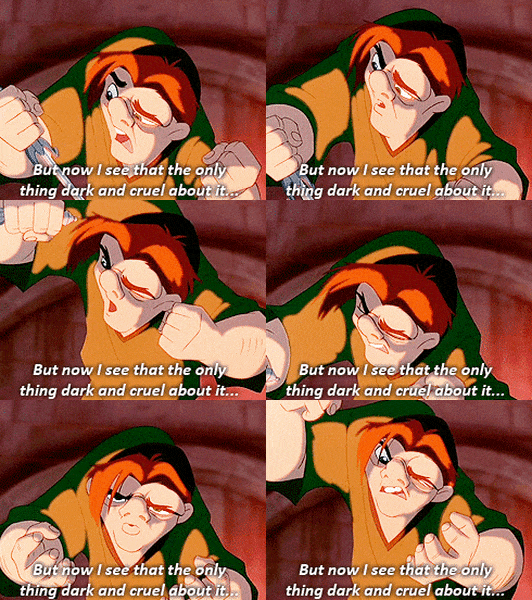
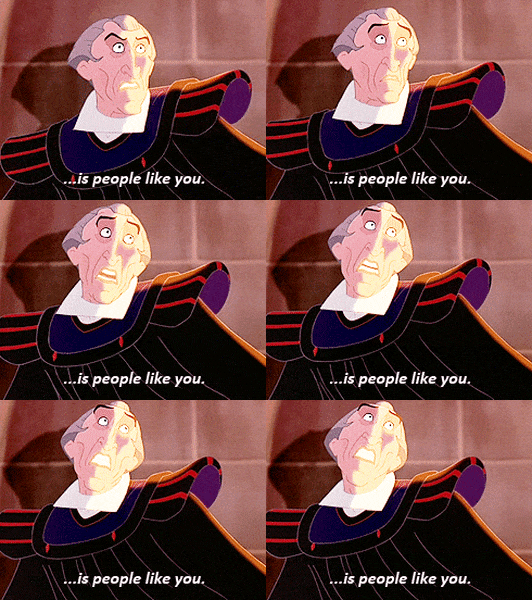
The two fight and Quasimodo almost falls, but Esméralda clutches onto him, as Frollo attempts to murder them both. However, Notre-Dame, after all these years, finally exacts universal justice against Frollo for his crime and he falls to his death. Thankfully Phoebus is there to catch Quasimodo before he falls too!
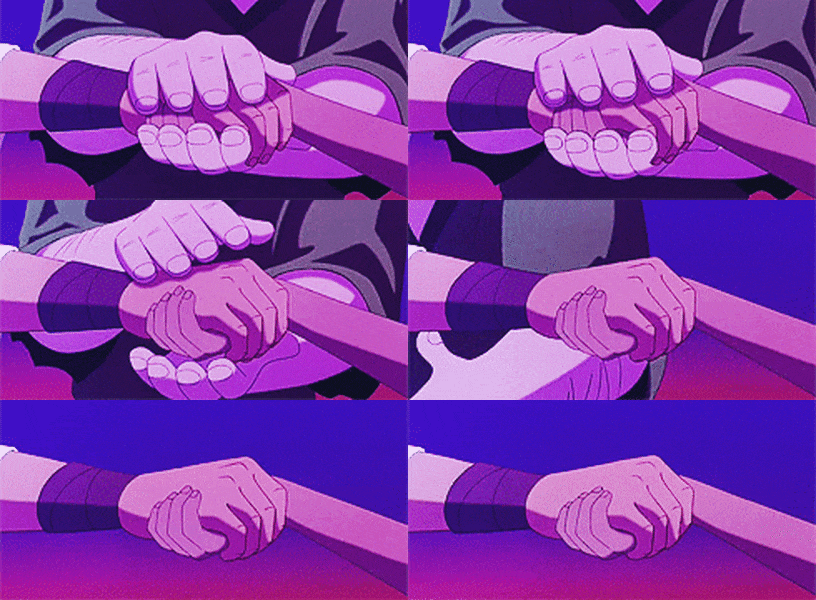
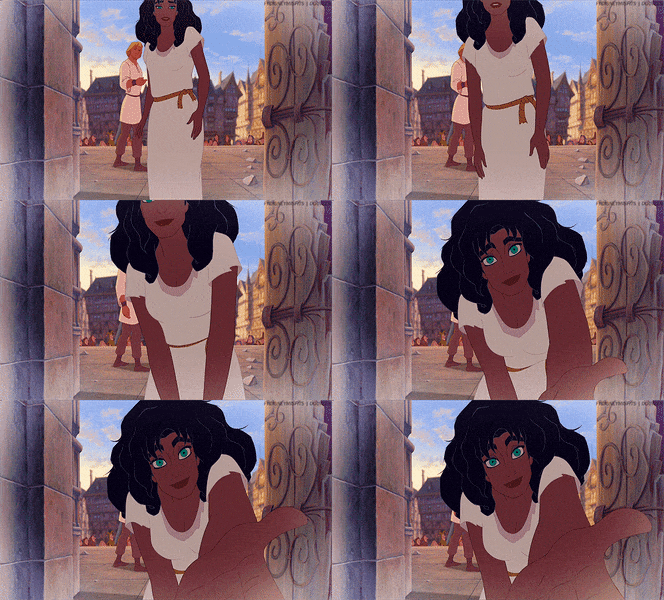
Quasimodo leaves Notre-Dame once more, but this time he is no longer viewed through cruel and ignorant eyes, but dawning understanding and appreciation. A little girl, representative of Quasimodo's own innocence, approaches him and throws her arms around him as a gesture of love and acceptance. The entire town then celebrates Quasimodo's heroic actions. Clopin refers back to his initial question posed at the beginning of the film, but re-frames it: "What makes a monster and what makes a man?" (quite similar to the implied dichotomy in Beauty and the Beast). Clopin's question drives the point home: it doesn't matter what you look like, but how you act that defines "who" you truly are.
Finally experiencing "Heaven's Light", Quasimodo finds "sanctuary" in the arms of the people who initially condemned him--the very same people he ultimately saved from Frollo's all-consuming "Hell Fire".
That concludes your lesson on The Hunchback of Notre Dame! Your next lesson will be on Treasure Planet. I'm still waiting to receive it, so please be patient--it will be up before you know it!
If you would like to leave a comment about the lesson, please do so here:
https://docs.google.com/document/d/1kBvL3TLPndbQOT7zeMAs_cB_9iR-RYvZiMfPXp4Z8SI/edit?usp=sharing
For those that don't know, there's a Hunchback sequel--where Quasimodo finds his true love!
EH