


Lesson 7) Treasure Planet (The Loot of a Thousand Worlds)
Thank you for your patience everyone.
Emma Hart
http://www.hogwartsishere.com/emmahart/https://www.facebook.com/emmaharthih
Lesson 7: Treasure Planet (The Look of a Thousand Worlds)
The Nineteenth Century and Robert Louis Stevenson's Treasure Island
“Fifteen men on the dead man’s
chest—Yo Ho Ho and a bottle of rum!” (Stevenson 1).

Hello students. Professor Hart here to start things off.
Many of you have no doubt heard the above song, especially those of you who are fans of The Pirates of the Caribbean series with Johnny Depp. However, you may be unfamiliar with the song’s origin. Before I hand the lesson over to Professor Polgara, I would like to briefly the film’s source text and provide some context for its publication.
Robert Louis Stevenson’s Treasure Island (1883) was published in
the nineteenth century (1800-1900), a time of great change for the British
Empire. Despite the political, social, and technological changes, one thing
remained the same—“All children, except imperialists, grow up” (Deane 689). Imperialism,
the policy of extending a country’s power through colonization (essentially
land grabbing), was the primary ideology of the nineteenth century,
particularly in Britain.
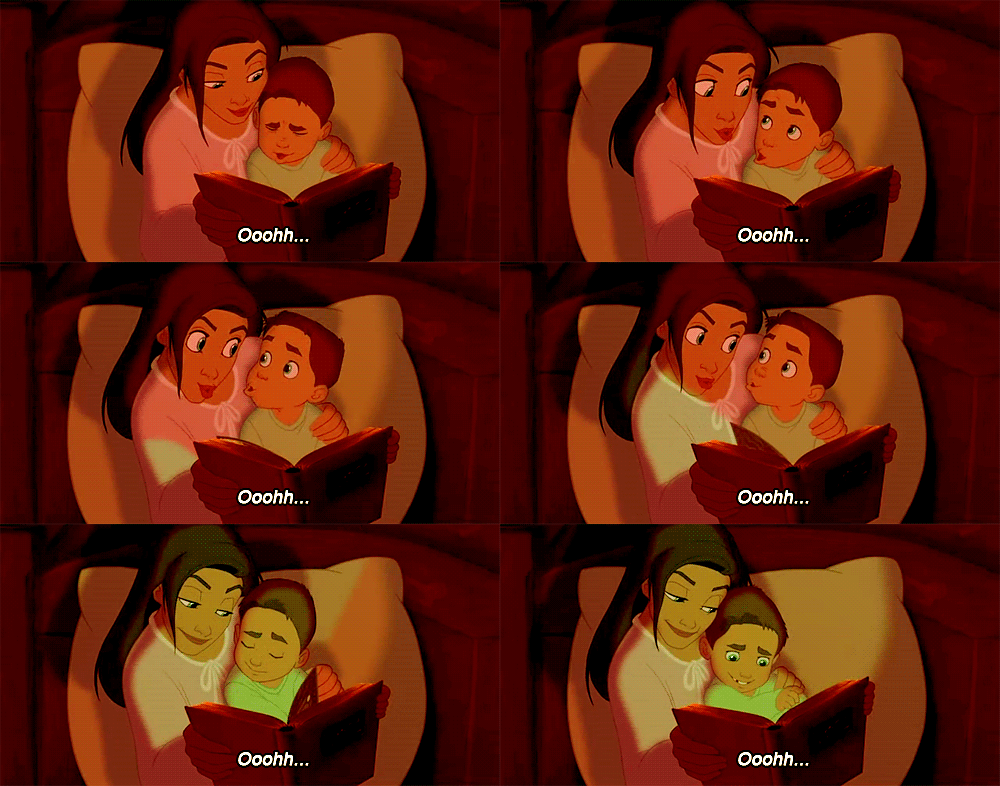
The largest group of individuals who perpetuated this
ideology were none other than young boys. Given that adventure fiction was full
of stories that “England told itself as it went to sleep at night” (Green 3),
it is no surprise that Disney’s film opens with young Jim Hawkins, at bedtime,
“reading” the story of Captain Flint’s adventures and his quest for “The Loot
of a Thousand Worlds”.

R.L. Stevenson's Map of Treasure Island.
Like Peter Pan and his refusal to
grow up, preferring to spend his days pursuing yet another adventure, young
British boys sustained the “imperialist imagination” (Deane 690) by reading
about (and potentially seeking out) imperial adventures. Stevenson published Treasure Island during a time of British
expansionism, clearly intoxicated by the idea of new material sources that
would result in financial gain. His protagonist, Jim Hawkins, sets out on his adventure
full of youthful optimism, just like his Disney counterpart. However, he soon
discovers the darker side of imperialistic endeavors and that greed, and not
heroism, is the sole motivating factor.
The novel is set in the mid-1700s (the film's ship design is modeled after this time period but with a twist of 28th century spaceships) and describes Jim Hawkins' journey to Treasure Island. Like his Disney counterpart, Jim is an innkeeper’s son, who helps his mother run the Admiral Benbow Inn on the west English coast. The novel and film follow a similar plot line, though in the novel Jim’s father dies a few days before the arrival of Billy Bones and his mysterious sea chest, whereas the film depicts Jim's father abandoning him and his mother when he is still very young.


Llandoger Trow (Bristol, England) is considered to be the inspiration for the Admiral Benbow.
Billy warns Jim of one-legged
“seafaring man” before dying of a stroke, mostly due to fear at having his sea
chest being discovered. Unlike the film, the novel does not depict Jim as a “rebel
teenager”. However, both novel and film Jim long for adventure. Upon the
discovery of Billy’s map (belonging to the famous Captain Flint), Dr. Livesey
and the district squire, Trelawney, propose buying a ship to search for the
treasure. Jim, of course, comes on board as cabin boy (not a far cry from his role in Treasure Planet, though his "genius" his far less sought out in the novel).
Whereas the film has Jim and Long John Silver bond over a series of “Spacer” duties, Stevenson’s Jim right
off the bat discovers that Silver and his crew are planning mutiny (discovering
their plan by concealing himself in an apple barrel). Informing the doctor and
the captain, Jim finds himself preparing to fight off a band of mutinous
pirates (their 7 loyal crewmen against 19 pirates) when they get to shore.
On shore, they encounter a half-crazed Englishman named Ben Gunn (the literary counterpart to B.E.N, the “absent-minded” and short-circuiting robot) who agrees to help them fight off the pirates in exchange for passage home and a share of the treasure.
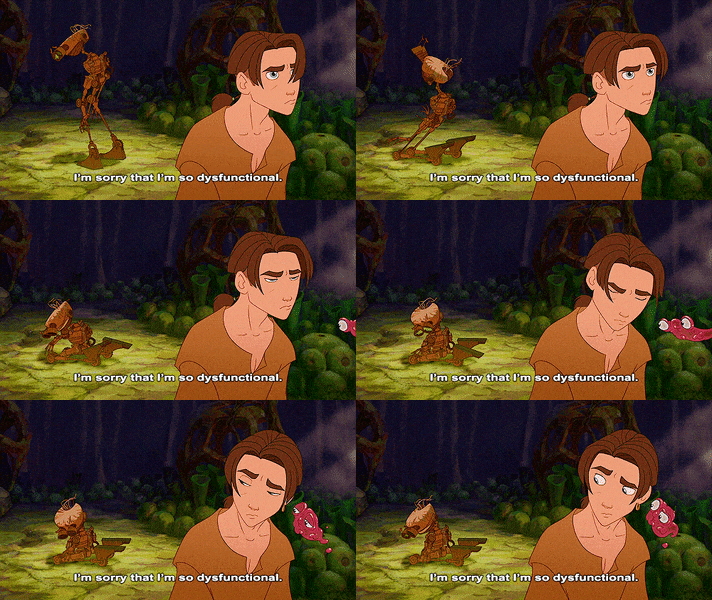
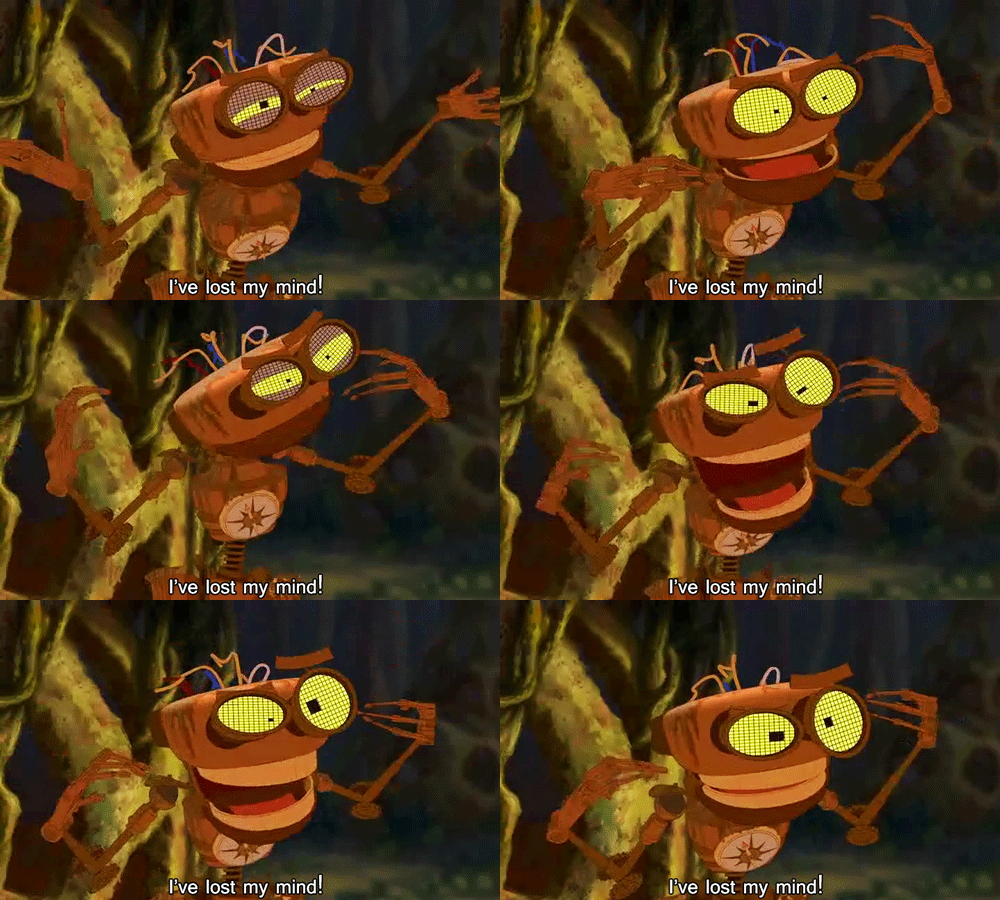
In typical Disney style, much of the gore is removed from the story (Silver murders quite a few people, both crew and pirate). Like in the film, Silver offers a truce (which, of course, fails), and Jim escapes on a small boat in order to secure another larger boat to return and help his friends. Of course, when he returns, Silver and his pirates are waiting for him, quite similar to the film.
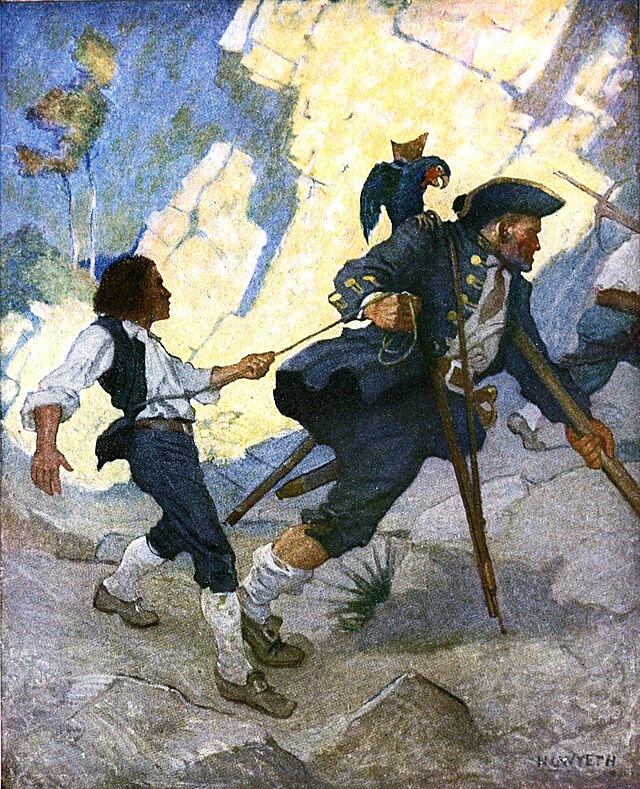
Long John Silver leading Jim to the Treasure.
Jim is merely a witness and
hostage in Stevenson’s novel, not the genius boy kid that Disney portrays him
to be. When they all reach the location of the treasure, they discover that
it’s gone. Gunn had long before discovered its whereabouts and moved it to his
cave, preventing the pirates from getting their hands on it. The few people who remain alive, including
Jim, the doctor, and Gunn, load as much of the treasure as they can onto the
ship and leave the remaining pirates (except Silver) on the island.
When they dock on their way back
to England, Silver steals a bag of money and escapes. Jim acknowledges that
there is more treasure back on the island, but can’t bring himself to go back
to retrieve it.
Given Stevenson’s opening line—“Fifteen men on the dead man’s chest—Yo Ho Ho and a bottle of rum!” (1)—it is no surprise Jim does not wish to return. In the early 1700s, the pirate Edward Teach—otherwise known as “Blackbeard”—punished his mutinous crew by marooning them on Dead Chest Island, otherwise known as "Dead Man's Chest" (located North East of Peter Island)—an island surrounded by high cliffs and without water or landing places. Each man was given a cutlass and a bottle of rum. Blackbeard’s intention was that his men kill each other; however, when he returned, he discovered that 15 men had survived.

Dead Chest Island (Inspiration for Stevenson's "Dead Man's Chest")
A pirate’s life is clearly no
life for Jim!
While the pages of nineteenth
century fiction of Empire contained glorious depictions of adventure, the truth
of these stories would have been far more horrific and potentially fatal to those
that attempted to live them out in reality.
From Dream to Film
What I find most fascinating about Treasure Planet is that, while it looks unbelievably different from its "Classic" Disney counterparts, the film was dreamed up by Roger Clements (who, along with John Musker, was responsible for The Great Mouse Detective, The Little Mermaid and Aladdin) right after he pitched The Little Mermaid to Disney. Initially his idea was entitled "Treasure Island in Space", but as other ideas came about (Aladdin, for example) Treasure Planet was put on the back burner. Finally, once Hercules was finished, Clements revisited the storyline with John Musker and worked hard over a number of years to get it right.
In an interview with People Magazine, Clements remarked that one of the rules in making the film was "NO magic":
"This was somehow a universe where there wasn't any magic. Everything that exists has some technological or scientific explanation regardless of how different it might seem from our world. There is a logic to everything that happens."
Legendary Disney animator Glen Keane (whose father designed the famous comic strip "Family Circus" and whose daughter, Claire, helped design most of the visual art in Disney's Tangled), was asked by Clements and Musker to design Long John Silver. They "won" Keane over by describing one particular scene in the film: the moment where Silver must decide between the treasure and saving Jim's life. Keane was struck by the unique dynamic between Silver and Jim; while Silver was not Jim's father, he certainly took it upon himself to teach the boy all he could.
Silver's "pep talk", described to Keane long before it was animated, reminded Keane of his years in high school, when he was fighting for a position as a halfback on his school's football team. Not the coach's first choice (a much bigger boy was Keane's coach favourite), Keane worked hard to leave an impression. When the time came, his hard work paid off and he was chosen as first starter over the boy. However, in the first game of the season, the coach pulled him out after a few plays and put the other boy in. At the age of 17, "that's your life", Keane recalls. After the game, the assistant coach spoke to Keane in the parking lot:
"Glen, you're gonna do great things. You're gonna get that starting position. That wasn't right what happened."
There were tears in his assistant coach's eyes and Keane cried too. The above animated scene really is full of heart and soul-- but not just of the character's, but Keane's as well.
Disney studios were shocked when they learned the film was nominated for a Best Animated Feature Oscar and therefore didn't think to capitalize on this as a marketing strategy. This was around the time the window for eligibility for the Annie Award was pushed to 18 months--a change that resulted in Monsters Inc. pushing out Treasure Planet. Disney also didn't think to market the film in relation to its source text, Treasure Island.
Unfortunately for Disney, the film was a financial write off (it only made $12 million in its opening weekend). Although many wouldn't consider Treasure Planet near the standard of "Classic" Disney, the film's breathtaking animation and emotionally "real" characters (along with a little help from R.L. Stevenson) endearingly secures itself in our hearts.
Over to you Professor Polgara!
The Nuts and Bolts of Treasure Planet
Hello, students. I am here today
to talk to you about Disney’s Treasure
Planet, a modern and futuristic re-telling of Robert Louis Stevenson’s
nineteenth century literary classic Treasure
Island, as Professor Hart has already mentioned. The tale follows a young
boy as he ventures out into the world to search for a hidden treasure, and ends
up finding himself along the way. Though some of the names throughout the two
stories remain the same, there are multiple additions in the form of secondary
characters, companions and active world objects, such as weaponry and vessels,
plus other environmental aspects.
First we’ll meet some of the characters and
learn a little bit more about them and then discuss some of the "nuts and bolts" of the technology. Unfortunately we won't have time to discuss everything, but I am happy to answer any questions by Owl regarding some of the space technology depicted in the film.
James (“Jim”) Hawkins
From a young age, Jim is an
extraordinarily inventive boy. He created his first Solar Sails at only 8 years
old, and his ingenuity only increased as he grew. His mother, Sarah Hawkins,
runs the Benbow Inn on the planet of Montressor, and while she is doing her
best to raise Jim right, she finds herself repeatedly frustrated by his
ne’er-do-well attitude and unwillingness to apply himself to his studies. Young
Jim grows up to be quite a handful after the disappearance of his father,
Leland Hawkins, when he was a child. Jim spends most of his time getting into
trouble, and minor scrapes with the Law.

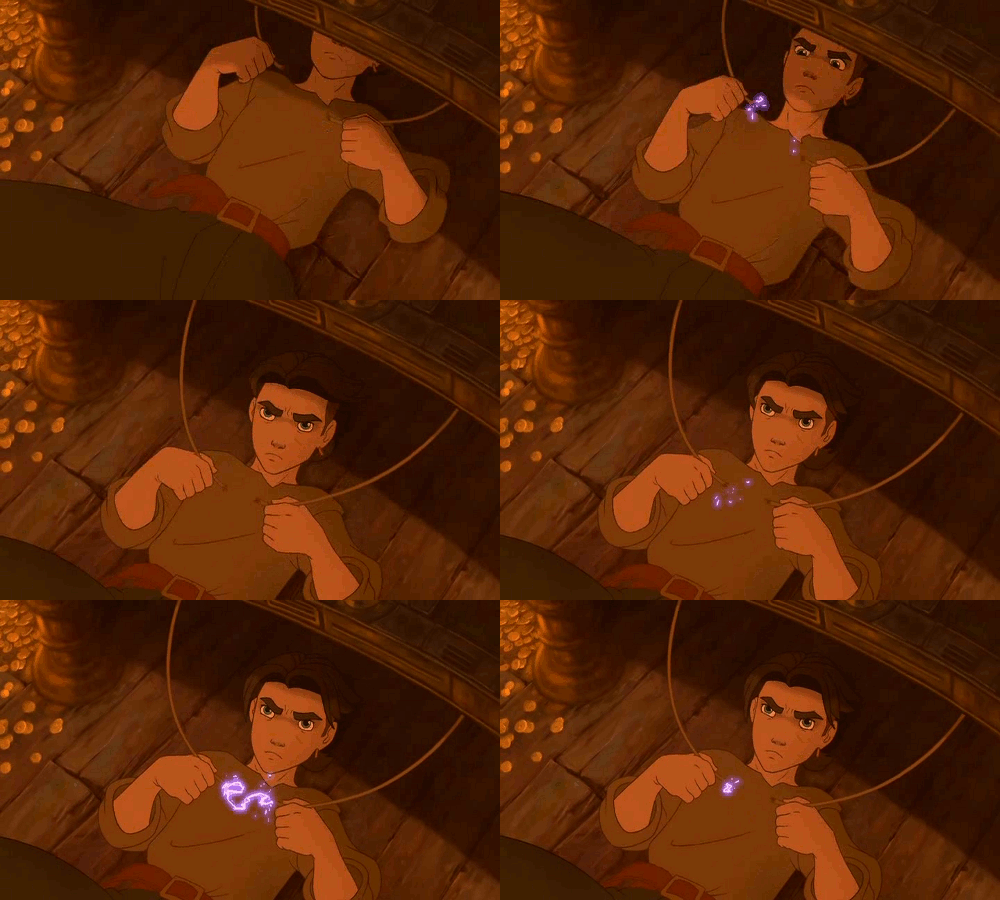
The stories that he was enamored with in his formative years ultimately shape his future, particularly his favorite tale—Captain Nathaniel Flint and the Loot of a Thousand Worlds. When Jim steps aboard the RLS Legacy (a subtle nod at Robert Louis Stevenson), he soon learns that the journey’s the thing; Jim grows fond of and close to “Long” John Silver, who essentially takes Jim under his wing. Unfortunately, Silver betrays Jim trust; however, it is this betrayal that results in Jim achieving his full potential.


Billy Bones
Billy is the instigation for Jim’s
journey through the Universe with Silver. While not much is known about this
mysterious Spacer (“sailor”), aside from being First Mate to Captain Flint, his
encounter with Jim demonstrates that he is full of determination and paralyzing
fear.


The night that Billy’s ship crash lands at the port just outside of the Benbow Inn, Jim rushes to Billy’s aide. Clutched in Billy’s talons is a medium sized wooden chest. Helping the old spacer to the Inn, Jim listens to Billy’s incoherent ramblings. To Jim, these words are mere gibberish, but once inside the dining area of the Benbow Inn, the old man opens the chest and hands Jim a hand-sized golden sphere. Shortly after, Billy dies, but not before giving Jim one final warning: “Beware the Cyborg.”

Captain Nathaniel Flint


This notorious figure of Space Pirate lore is said to have plundered a thousand world’s worth of treasure in his time in the Universe. He employed a tightly knit crew aboard his vessel, which was said to appear and disappear at will and leave no trace of its existence. Some Spacers feared that Captain Flint’s ship was a spectre of the Ethereum and that it only showed itself to those who would soon perish.
Nathaniel Flint’s history is not known, nor was his demise recorded or even known about until it was discovered by Jim on the legendary Treasure Planet.
Flint was a very paranoid, extremely aggressive individual that trusted no one, aside from his First Mate. However, even Billy Bones was not able to understand the map to Treasure Planet that Flint entrusted him with. Flint’s methods of piracy were extremely advanced, and were assumed to have been technology that was stolen from a mysterious, advanced species, twisted to his ultimate goals.
“Long” John Silver
Silver and his crew are hired by Doctor Delbert Doppler to journey across the Universe in search of the legendary Treasure Planet. Although the purpose of the journey is never stated in view of the crew, it seems that Silver knows well in advance that the ship is set to locate Flint’s treasure.
Not much detail is known about Silver's
relationship to Billy Bones, or even Captain Flint; however, he has, by his own
admission, spent the majority of his life in search of the Loot of a Thousand
Worlds.
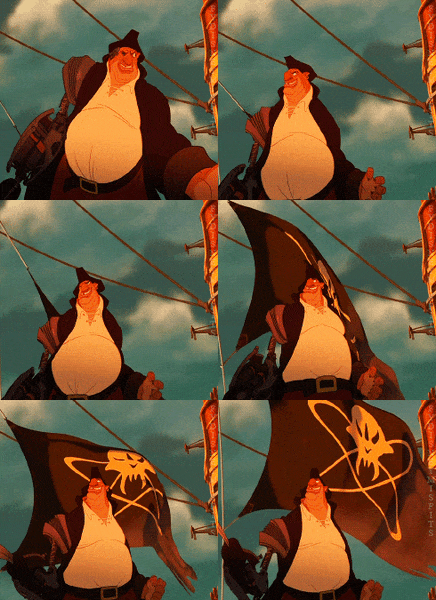
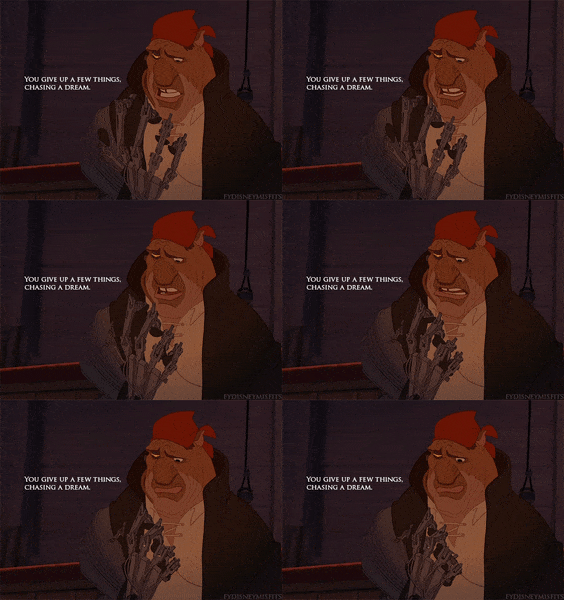 His journeys have taken their toll on him, causing literal loss of
limbs: his right arm, leg and eye have all been replaced by cybernetic
implants/appendages.
His journeys have taken their toll on him, causing literal loss of
limbs: his right arm, leg and eye have all been replaced by cybernetic
implants/appendages.
He is driven towards his goals by
the desire to retire from a long life of being a Spacer, with enough treasure
to sustain himself until the end of his days.
This fact makes him a very
dangerous adversary, and his sheer cunning makes him even more formidable.

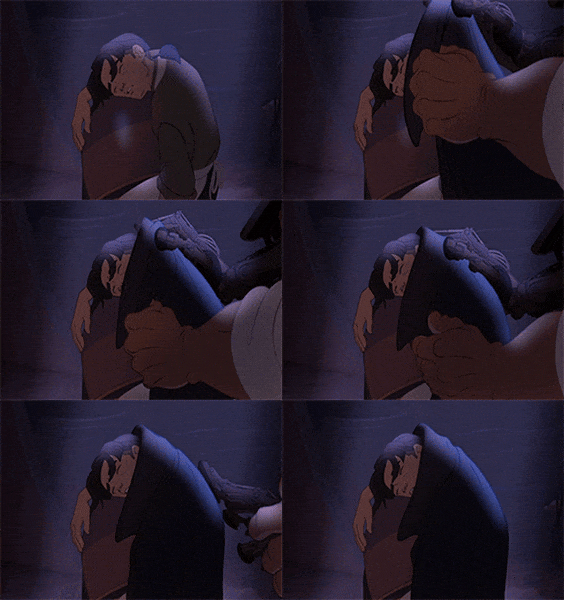
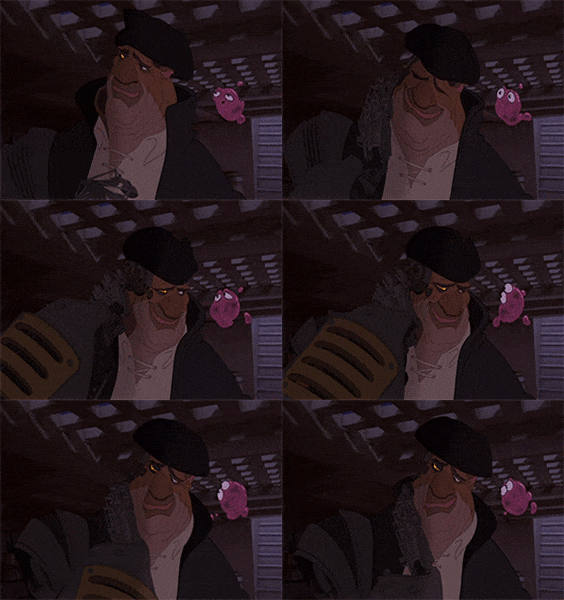
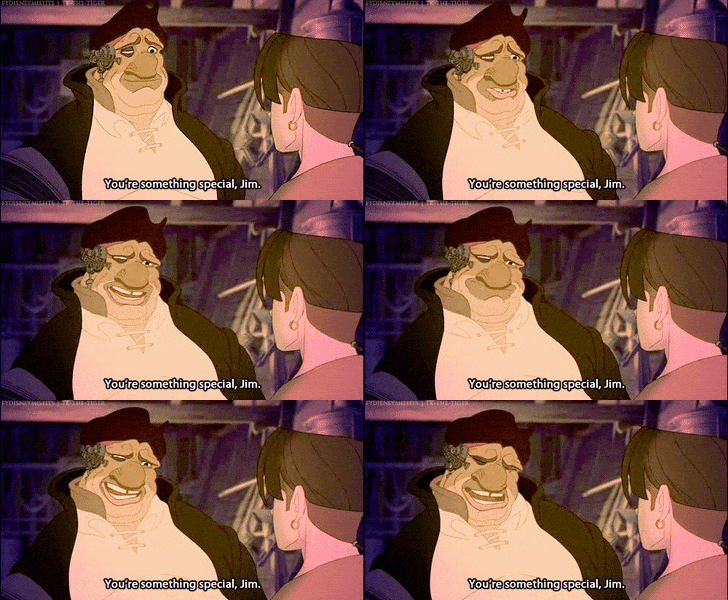
It is this bond between Jim and Silver that becomes a core component of the story, furthering the betrayal and mistrust that Jim feels upon discovering Silver's true identity and intentions.

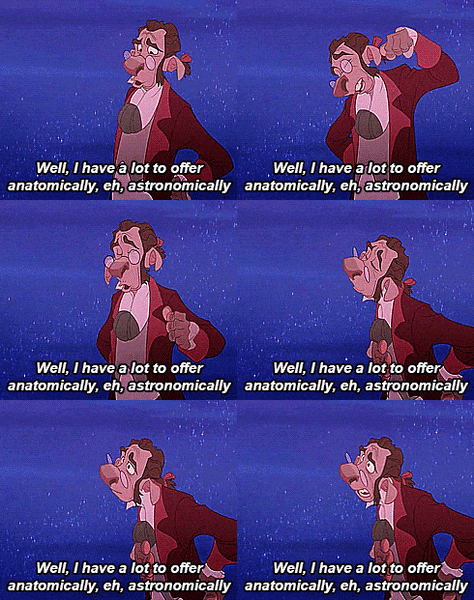
Doctor Delbert Doppler and Captain Amelia
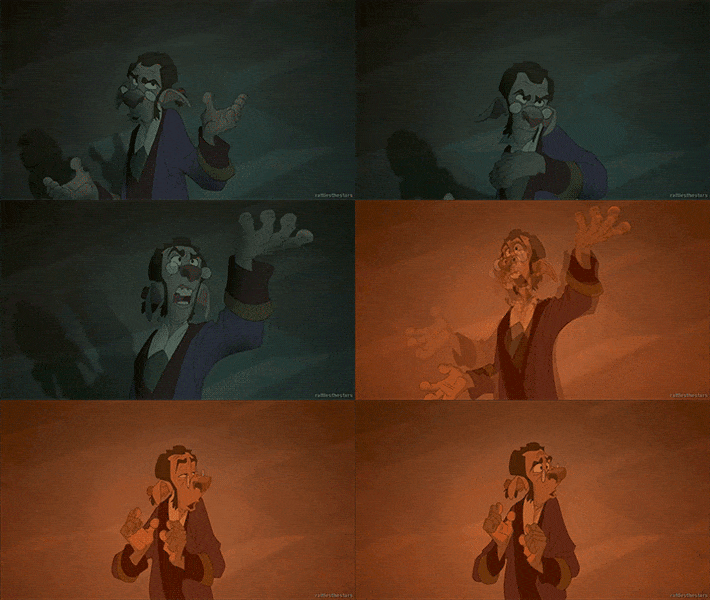
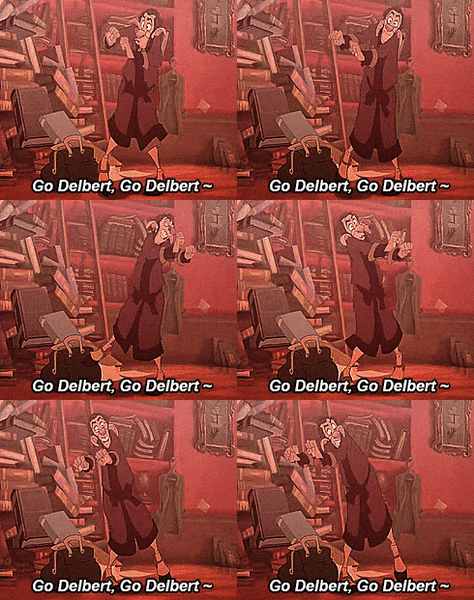
Doctor Doppler is a long-time friend of Jim’s mother, Sarah Hawkins, and was present during the incident in which Billy Bones bequeaths the golden orb to Jim, the night the Benbow Inn burned to the ground. As a man of science and a renowned Astrophysicist, Doctor Doppler is able to fund the entire expedition, including hiring a rather suspicious crew aboard the RLS Legacy, which Captain Amelia mistrusts. Doctor Delbert is thought to be a descendant of Christian Doppler, the scientist and physicist that discovered the Doppler Effect.
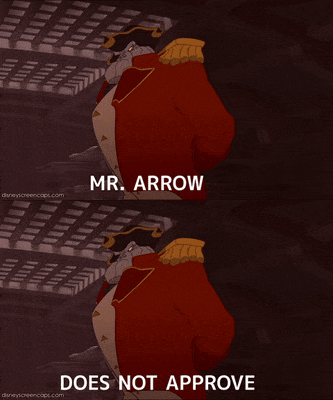
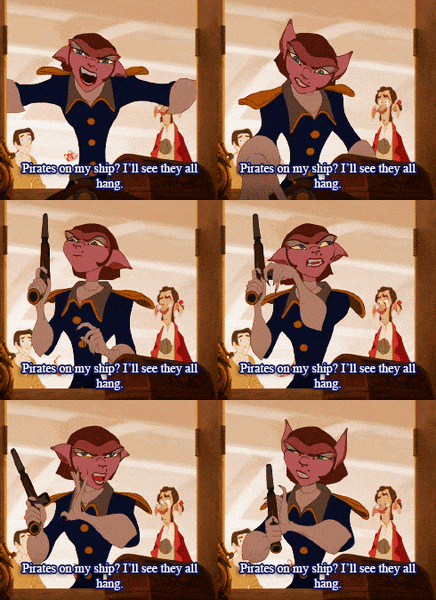
Captain Amelia, and her first
mate Mr. Arrow, are both old friends that met at Interstellar Spacing Academy
when they were still very young. Amelia’s easy-going and flexible personality
is a strong contrast to the strong and stubborn impression that Mr. Arrow gives
off; as such they work as a great team controlling the unruly spacers that
often crew their ships.
After the untimely loss of Mr.
Arrow after a Solar Storm, Captain Amelia’s fondness for Doctor Doppler grows exponentially, and
his impressive acumen for science and astrophysics intrigues her to get to know
him better. The close friendship that they develop soon becomes a budding
relationship (and results in marriage and children).

Solar Sails, Ship Stability, and How to Breathe
While the ships are never fully explained in Treasure Planet, some additional research and theorizing have produced some interesting results that may help explain some of the more interesting features of the ships.
Artificial Gravity
It is stated several times that
there is a complex system of wires, engines, gyros, and machines holding the
entirety of the ship together in the vast vacuum of space, as well as
propelling it through the interstellar matter all around them. However, it is
only mentioned once or twice about the way that these systems maintain a
balance between having their spacers floating off into nothing, and keeping
their feet firmly planted on the deck.

Rotation
A rotating spacecraft can produce the feeling of gravity on its inside hull. The rotation drives any object inside the spacecraft toward the hull, thereby giving the appearance of a gravitational pull directed outward. Often referred to as a centrifugal force, the "pull" is actually a manifestation of the objects inside the spacecraft attempting to travel in a straight line due to inertia. The spacecraft's outer hull provides the centripetal force required for the objects to travel in a circle (if they continued in a straight line, they would leave the spacecraft's confines). Thus, the gravity felt by the objects is simply the reaction force of the object on the hull reacting to the centripetal force of the hull on the object, in accordance with Newton's Third Law. In this method, there are no actual systems on board to create a type of gravitational force, but merely a physics-based approach to the problem of creating gravity that requires a large ship, and a mechanical solution.
Gravitomagnetism
Magnetism or Gravitomagnetism are the likely approaches to the solution of artificial gravity generation that we see on the ships and vessels found in Treasure Planet as they are able to be produced on much smaller scales, and require less of a mechanical approach, and more of a systems-based, scientific one.
In both of these devices, extremely powerful magnetic fields are generated by a series of large and small magnets that can produce enough of a field in order to simulate at least 1g (Earth’s gravity) and retain the occupants placement on the deck of the ships. The only secondary system that these methods require is an advanced cryogenics (cooling) method in order to keep the magnets superconductive, or a large amount of power. This seems more likely as the combined use of Solar Sails would provide more than ample energy to power the magnetic fields.
Charging the Systems
In each of the vessels that we see in Treasure Planet, there is a highly sophisticated means of collecting, storing and using energy to propel and maintain ship systems while in space.
Each ship is fitted with at least
one large sail, and a main mast in the center of the boat that is constructed
of a thick metal-based core / storage system, with a wooden outer shell. The
sails in particular are quite interesting, and made of a specialized fabric
that is used to capture Solar Energy.

This is not specific to our own Sun’s light, as all stars produce generally the same types of radiation, each different star type only producing higher or lower quantities. The fabric acts as a type of absorption shield that pulls in this stellar radiation and directs it into the storage systems (the masts) for each ship. This energy is then used to power various systems, such as the artificial gravity, the engines and other various components like the environment generators.
We learned about something similar to this in Astronomy Year 2. You can read more about the Light Sail here: http://www.hogwartsishere.com/library/book/2253/read/?chapter=3.
Breathing It In
There are many possibilities for how the spacers are able to breathe in the depths of the interstellar matter, just as well as they do on any planet that they happen to land on. While we can go into extreme speculation as to just how that is possible, we will be narrowing down this portion to only how the artificial environment is generated on the vessels and ships.
While it seems apparent, most of the species in the world of Treasure Planet are thought to be carbon based lifeforms, and therefore require some type of oxygen to sustain themselves and maintain properly oxygenated body systems (organ function, blood flow, etc). Although it is possible that in the distant future there are modifications that can be made to the body in order to maintain breathing function outside of their natural habitats, I assume that on spacing ships within Treasure Planet there is an artificial environment that is generated by an advanced system on the vessel.
This system has been put into use by Muggle NASA and it is also employed in some areas where deep sea diving requires oxygen to be maintained at very low depths and is loosely referred to as a Life Support System.
The basic procedure for producing an active Life Support System is a method called Electrolysis. This system uses water and electrical energy to produce oxygen. How? Well, simply put, by running a current of electrical energy through water, it causes the atoms (Hydrogen and Oxygen) to split into two separate gasses: Oxygen gas and Hydrogen gas. Most Hydrogen gas would then be vented into space, and the purer Oxygen gas would then be sent into any living chambers, or into the vessels projected atmosphere (like a force field) to maintain breathable air for all of its passengers.
There is a possibility of recombining the Hydrogen gas with the Carbon Dioxide produced by breathing in a chemical reaction that would generate water and methane, which would then, in turn, produce more oxygen to breathe. The only by-product of this would be the methane, which theoretically could be used as a fuel source or, at worst, vented out into space as ‘waste.’
That's all we can cover for today, as I don't wish to overwhelm you with information. Given that this is the first time you've heard from one of your Astronomy professors, I thought it best to level the playing field so to speak. Of course, you'll be hearing from my Co-Professor, Brad Turing, in the next Disney lesson. If you're looking for "breadth", his lesson certainly accomplishes that.
Like Professor Dax said, there is much more he would have loved to have covered, but of course you'll be learning more about the stars and space as you advance in your Astronomy studies. Given that this film emphasized "science" over "magic", especially in its depiction of Supernovas, black holes, 28th century virtual maps and space travel, I highly recommend contacting Professor Dax to discuss these topics further. I'm sure he'll be happy to hear from you!


The next lesson, your second last Disney Week 2 lesson, will function as a kind of overarching lesson that will span many eras and many Disney genres.
Thank you so much for coming along for the ride. Until next time.
EH
https://www.facebook.com/HiHMagicalLiterature
https://www.facebook.com/HiHProfessorStudiesTrack
